With all the recent hacking scares all over the world, you know and understand that your cyber security and your business’s cyber security are extremely important. However, when it comes to authentication processes, you may not be sure what the real deal is. There are two seemingly similar types of authentication that are often confused. Those are, of course, two-step and two-factor authentication. Find out more about the differences between the two here to ensure your cyber security will always be top of the line.
If you are seeking out a way to improve your business’s cyber security, both for your business itself as well as for your customers, you are likely looking at your authentication process. Two-step and two-factor authentication are two of the most commonly used options in cyber security. And in current cyber security, many businesses use the terms two-step and two-factor authentication interchangeably.
There are, however, subtle differences between the two. A two-step authentication process requires a single-factor login (such as a memorized password or biometric reading) as well as another of the same type of login that is essentially sent to the user. For example, you may have a memorized password for your first step and then receive a one-time-use code on your cell phone as the second step.
Two-step authentication does function to add an extra step in the authentication process, making it more secure than a single-step authentication (i.e. just the password). However, if a person or business is hacked, it will do only a little to stop hackers from getting a hold of whatever they are looking for.
On the other hand, there is two-factor authentication (sometimes referred to as multi-factor authentication), which is significantly more secure. This type of authentication requires two different types of information to authenticate. For example, it could be a combination of a fingerprint or retinal scan as well as a password or passcode. Because the types of information are different, it would require a hacker a great deal more effort to obtain both forms of authentication.
In essence, every two-factor authentication is a two-step authentication process, but the opposite is not true. With this information in mind, you can be certain that you are using the right type of authentication in your business to keep your business and customer information as secure as possible.
Your network needs the best security technology has to offer. What type of authentication that results in is just one of hundreds of choices that must be made to achieve that end. To take the stress out of securing and protecting your network, call us today for all the help you could ever ask for.
 For as long as there have been cybercriminals, there have been social engineers, or people who use tricks and scams to force other people to volunteer sensitive information. There are several ways to use social engineering to acquire valuable information like account passwords and bank accounts, but avoiding these scams comes down to one thing: training. Let’s take a look at some of the easiest ways for your employees to avoid one of these scams.
 Everyone, from doctors to lawyers, needs to continue learning to stay ahead of the times. Business owners might have it worst of all, oftentimes needing to stay on top of several industries to keep their company running. Keep reading for a refresher on all the latest trends and buzzwords used in the cybersecurity sector.
 WordPress is an amazing open source platform that is favored by individuals and business users worldwide due to its ease of use, simplicity and flexibility. However, given that it is the most widely used content management system, it is also the most vulnerable platform out there. Recently WordPress has released an update that addresses security issues for all previous versions. Check out exactly what the update entails.
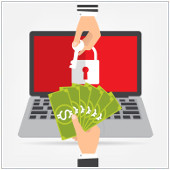 One of the biggest fears security experts have may be coming true: self-replicating ransomware. Viruses that have the ability to copy and spread themselves to new systems are nothing new, but until now ransomware attacks have been targeted campaigns. The best way to protect your network from a security threat is to understand it, here’s everything you need to know about this latest development.
 As more and more content management services are released to aid SMBs in online marketing, security risks also increase. One such helper is the image processing service ImageMagick. And while it has proven useful to countless businesses, it is now something you should be concerned about from a security standpoint. Let’s take a minute to discuss this vulnerability and what you can do to protect yourself.
 Why do hackers attack? Is it for money, notoriety, or political reasons? Many business owners never ask these questions, and instead only think about the means of how a cyber attack takes place. But knowing the motive behind a hacker’s attack can help you understand whether or not you’re a target and what data you need to protect. So let’s take a closer look at 4 different types of hackers and their motives.
 When it comes to monitoring your employees online, there are potential positives and negatives for your company. But as a business owner who’s never done it before, you may be clueless as to what these are. So to help, we’ve come up with a list of the pros and cons of employee monitoring. And if you do decide to go through with it, we’ve provided some tips for a smooth implementation process.