 In the 21st century, personal computing is with us wherever we go. This is all thanks to the proliferation of mobile devices such as smartphones and tablets. These devices allow us to take work home with us. And, with bring your own device (BYOD) strategy, businesses have never been so productive. However, BYOD poses a number of security risks if you’re not careful. What are these problems? How are they caused? Here are some BYOD security risks you should know before implementing it in your business.
Data leakage
The biggest reason why businesses are weary of implementing a BYOD strategy is because it can potentially leave the company’s system vulnerable to data breaches. Personal devices are not part of your business’s IT infrastructure, which means that these devices are not protected by company firewalls and systems. There is also a chance that an employee will take work with them, where they are not using the same encrypted servers that your company is using, leaving your system vulnerable to inherent security risks.
Lost devices
Another risk your company has to deal with, is the possibility of your employees losing their personal devices. When devices with sensitive business information are lost, there is a chance that this could end up falling into the wrong hands. Additionally, if an employee forgets to use a four digit PIN code to lock their smartphone or tablet, anyone can gain unauthorized access to valuable company data stored on that particular device. Therefore, your company should consider countermeasures for lost devices like completely wiping the device of information as soon as an employee reports a missing or stolen phone.
Hackers can infiltrate your system
Personal devices tend to lack adequate data encryption to keep people from snooping. This along with the fact that your employees might not have updated their devices can allow hackers to infiltrate your IT infrastructure.
Connecting to open Wifi spots makes your company more susceptible to hackers. Open wireless points in public places can put device owners at risk because there is a chance that hackers may have created that hotspot to trick people into connecting. Once the device owner has connected, attackers can simply surveil web activity and gain access to your company’s accounts.
Vulnerable to malware
Viruses are also a big problem when implementing BYOD strategies into your business. Using personal devices means your employees can access whatever sites or download any mobile apps that your business would normally restrict to protect your system.
Jailbreaking or rooting a device also puts your systems at risk because it removes limitations imposed by the manufacturer to keep the mobile software updated and protected against external threats. It’s best to understand that as your employees have the freedom to choose whatever device they want to work with, the process of keeping track of vulnerabilities and updates is considerably harder. So if you’re thinking about implementing BYOD strategies to your business, prepare your IT department for an array of potential malware attacks on different devices.
So you might be thinking that it would probably be best to just avoid implementing a BYOD strategy in the first place. However, BYOD will help your business grow and adapt to the modern workplace, and should not be dismissed as a legitimate IT solution. It’s just important to educate your company about these risks so that problems won’t occur for your business down the line.
If you need some help implementing IT security solutions for your company, or if you have any concerns regarding IT, give us a call.
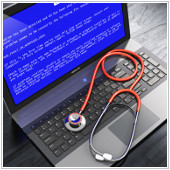 So your computer just crashed. Our condolences. When your PC displays a blue screen and spontaneously restarts your computer, this is called the Blue Screen of Death (BSoD). These errors are usually caused by internal failures in your hardware or, sometimes, your software. That’s all well and good, but how can you troubleshoot these problems? Before taking any actions to fix your computer however, you’re going to have to do some detective work and pinpoint what part of your system caused the crash.
 Simply getting a ‘Like’ on your post is not enough anymore. It doesn’t give you any other useful data and you can’t immediately tell what people feel about your post. However, with Facebook reactions, you can be getting just what your company’s social media page needs. Reactions allow people to quickly express what they think about your post with five new emoticons. But how can you use this to get more exposure and engagement? Here are five tips for you to consider if you want to effectively use Facebook reactions for your social media campaign.
 When purchasing new technology, how often do you consider its return on investment? For many business owners, calculating ROI is a tricky task that is sometimes skipped altogether. It shouldn’t be because if IT isn’t saving you money, it’s costing you. Here’s how you can gain a better understanding of technology ROI and how you can calculate it in your business.
 As companies go to the Internet to conduct their business, their IT security becomes more vulnerable to many hackers and viruses. That’s why it’s even more important to recognize whether or not your systems are under threat from malicious software to swiftly fend off the infection. So how do you know if your company’s IT security is under threat? Here are a few warning signs to tell if you are a victim of malware infection.
 With technology changing so rapidly, it’s easy to get caught up in outdated beliefs. And when it comes to Disaster Recovery, far too often do we see business owners still clinging to ideas that no longer apply. So, what kind of DR myths are still widely accepted by the masses? Here are three that need to be retired into IT folklore.
 There comes a point in the life of every laptop where its hard drive slows and it begins to function at a snail’s pace. At this point, many people either toss it or retire it to the back of a closet. If you’re one of the latter, then this Spring you may be able infuse life into it. A new software available has been making waves with its ability to revive old laptops, and make them run faster than you could believe.
 When it comes to monitoring your employees online, there are potential positives and negatives for your company. But as a business owner who’s never done it before, you may be clueless as to what these are. So to help, we’ve come up with a list of the pros and cons of employee monitoring. And if you do decide to go through with it, we’ve provided some tips for a smooth implementation process.
 You know social media marketing can be valuable for your business but, simply put, you just don’t have the time for it. And besides, you’re no social media expert, so the whole process itself can be unnecessarily long as you try and figure out what’s most effective. But what if there was a way you could spend less time on social media while producing more results. Sounds good, right? These 10 tools may be able to help you do just that.